A ceiling leak in Phoenix rarely means the water started where the stain appears. Water travels along ceiling joists and truss chords before it drips, so a brown ring in an Arcadia living room may trace back to a roof…
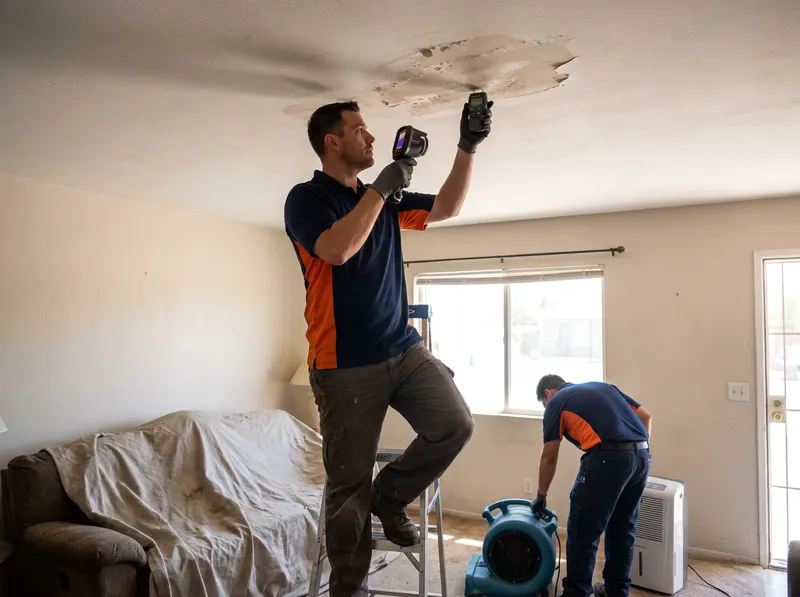
A ceiling leak in Phoenix rarely means the water started where the stain appears. Water travels along ceiling joists and truss chords before it drips, so a brown ring in an Arcadia living room may trace back to a roof penetration or a rooftop AC condensate line several feet away. The first step is finding the true source. A moisture meter and thermal survey map the wet zone across the ceiling, and containment is set before any material is opened so the drip does not spread across a wider span of drywall.
Phoenix ceiling leaks cluster around two seasons. Monsoon storms between June and September drive wind-blown rain under lifted tiles and around flashing on flat and low-slope roofs common in Willo Historic District and Encanto-Palmcroft. The second cause runs year-round: rooftop package HVAC units and evaporative coolers on homes in Ahwatukee Foothills, Desert Ridge, and Paradise Valley Village leak condensate or supply water directly into the ceiling cavity. A wet ceiling from clean HVAC water dries differently than storm water carrying roof debris and grit.
The restoration sequence runs in order: 1) stop or contain the active source; 2) map moisture across the ceiling and adjacent walls; 3) remove saturated insulation and any sagging drywall that has lost structural integrity; 4) set air movers and a dehumidifier to dry the cavity and framing; 5) confirm framing moisture is below roughly 16% before closing the ceiling; 6) hang, tape, texture, and paint the repaired section. Drying a single-room ceiling in Phoenix's low humidity usually runs 2-4 days, faster than in humid climates because outdoor dew points are low most of the year.
Ceiling drying fits when the drywall is intact and only damp, and the wet span is caught within a day or two. Full drywall removal and replacement fits when the ceiling is sagging, stained through, or the leak sat long enough to grow mold on the paper facing. The trade-off is cost against certainty: drying-in-place is cheaper and keeps the original ceiling, but a heavily saturated or sagging panel needs removal because trapped moisture above the drywall keeps feeding damage. Insulation in a wet ceiling is almost always replaced, since blown or batt insulation loses R-value once soaked and holds moisture against the framing. Homes in Maryvale, Sunnyslope, and Laveen with older flat roofs often need the roof source repaired by a licensed roofer before drying can hold, and that coordination is part of the process.
Every job gets a firm, written price after a free on-site visit.
Tell us about your ceiling & roof leak water damage job in Phoenix and we'll send a clear, written quote, usually the same day.
 Water Damage Restoration Phoenix