Water damage restoration in Phoenix, AZ removes standing water, dries the structure, and returns a home or building to pre-loss condition, and crews are typically dispatched 24/7 because water spreads through drywall and subfloor within minutes. A water damage restoration company near me search usually starts the moment a searcher finds a burst supply line under a sink, a failed water heater, or a monsoon roof leak dripping into a hallway.
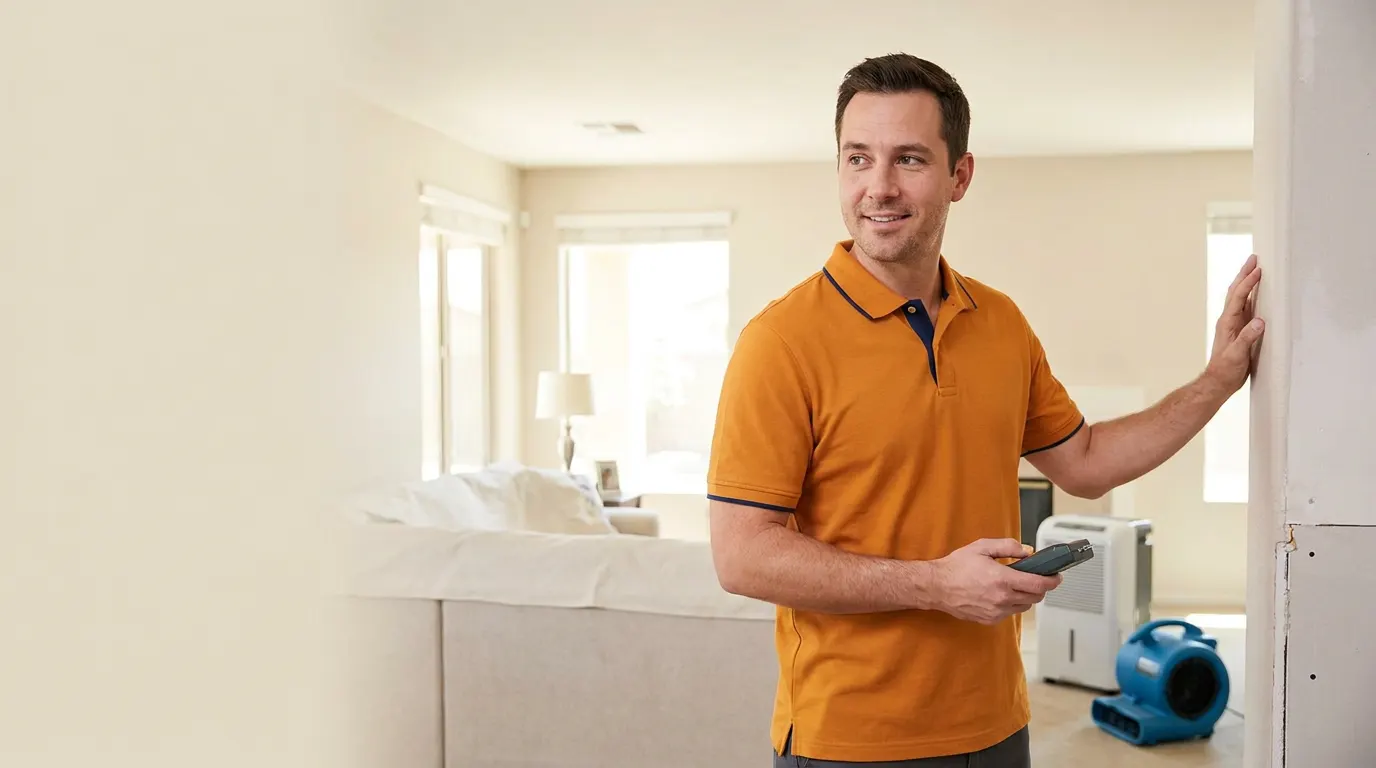
Water damage restoration in Phoenix is the emergency process of extracting standing water, drying the structure, and repairing damage to floors, drywall, and framing after a burst pipe, appliance leak, roof leak, or flash flood.
Every service reflects the same meticulous attention to detail, whether it's a single job or a larger water damage restoration project across Phoenix.
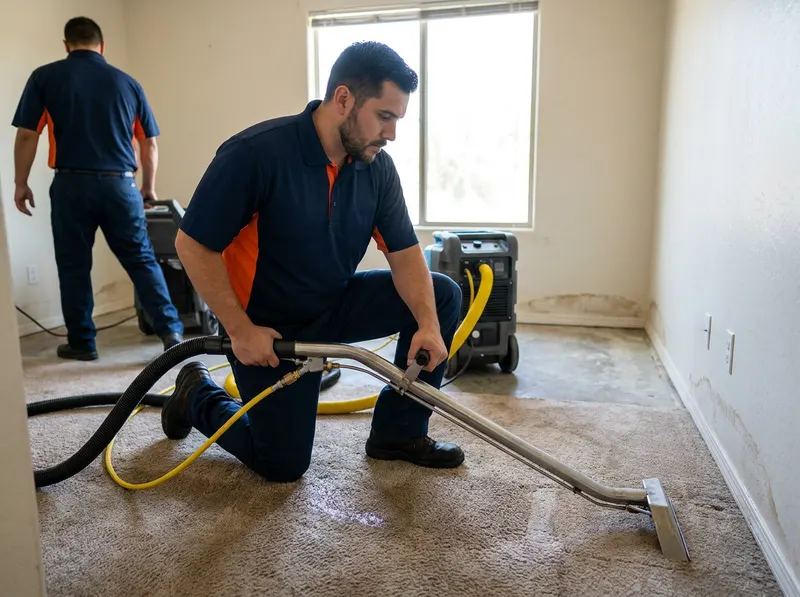
Truck-mounted and portable extractors pull standing water from a flooded room, fast, before it migrates room to room. This is the first step on any active loss, a single 2-inch layer of water across a 200 sq ft room is roughly 250 gallons that keeps wicking upward until it is removed. Truck-mounted units pull water far faster than a wet vacuum, and crews follow it under baseboards and into wall cavities where standing water hides. Available 24/7 across Phoenix, with the fastest response inside the core Arcadia, North Central Phoenix, and Sunnyslope corridor.
Get a quote →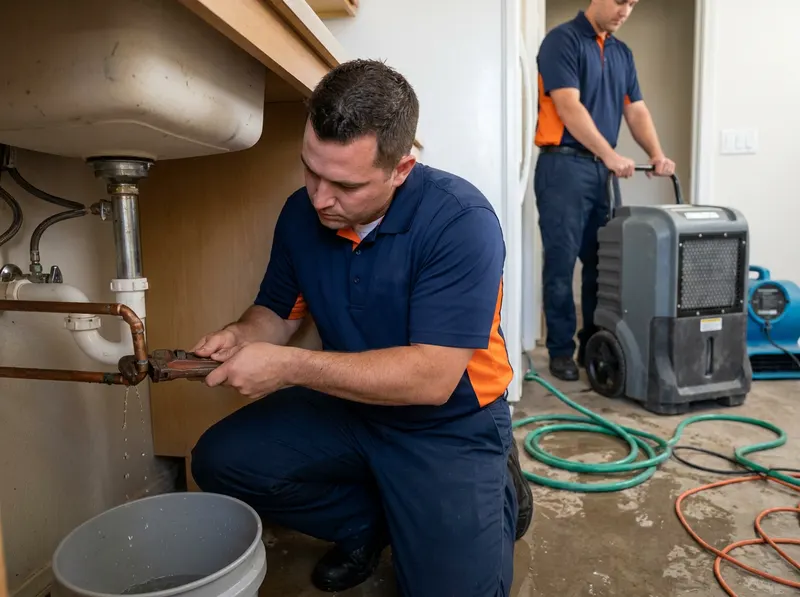
Repair and dry-out for supply-line failures, from a pinhole leak under a sink to a full copper line rupture. Cold-snap pipe breaks rise in December-February when overnight lows dip near freezing in North Central Phoenix and Ahwatukee Foothills. A half-inch supply line left open can release several hundred gallons an hour, so the source is stopped at the main first, then the affected framing and cabinetry are dried. Crews trace the water from the break point to wherever it settled, because a second-floor pipe often shows its damage on a first-floor ceiling.
Get a quote →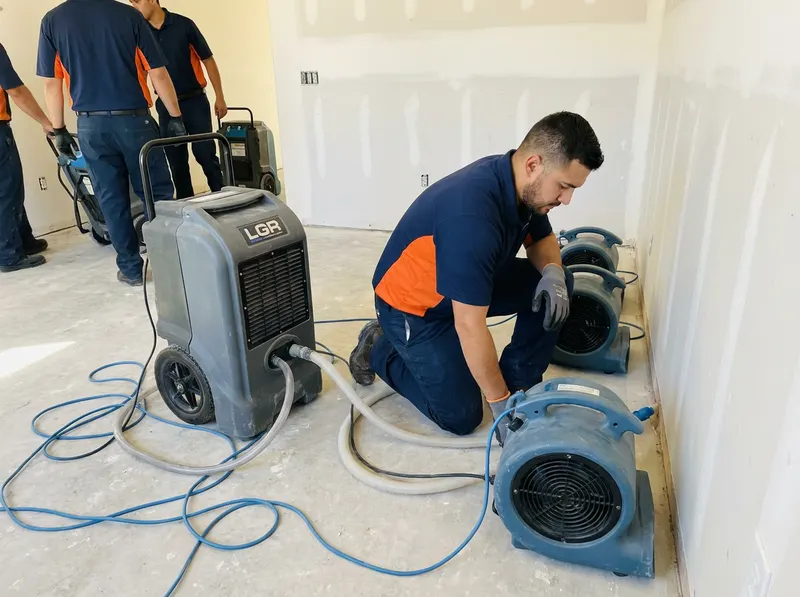
Air movers and commercial dehumidifiers dry framing, subfloor, and drywall over a monitored 3-5 day cycle. Moisture readings are logged daily with a meter so drying stops at the correct point instead of guesswork, targeting the wood moisture content the IICRC S500 standard treats as dry. Prevents the hidden moisture behind baseboards that becomes mold two weeks later. Equipment is sized to the room, one air mover per 10-16 linear feet of wet wall, so a large great room may run six or more units at once.
Get a quote →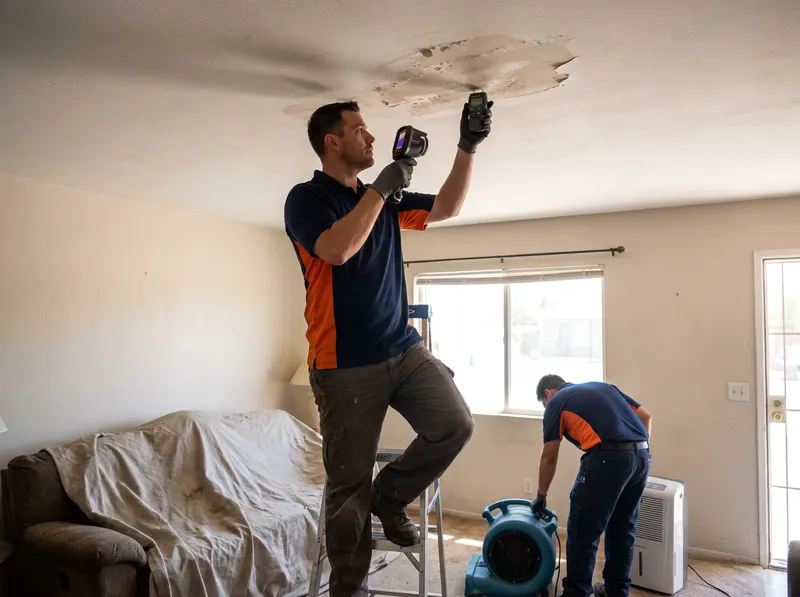
Repair and dry-out for water intruding through the roof, common on flat and low-slope Phoenix roofs during monsoon downpours. Wet insulation and sagging drywall are removed, the cavity dried, and the ceiling restored. A brown ring on a ceiling is confirmed wet with a moisture meter before any drywall comes down, so intact areas are left alone. Peak volume runs mid-June through late September, when a single microburst can put more than an inch of rain on a roof built to shed almost none.
Get a quote →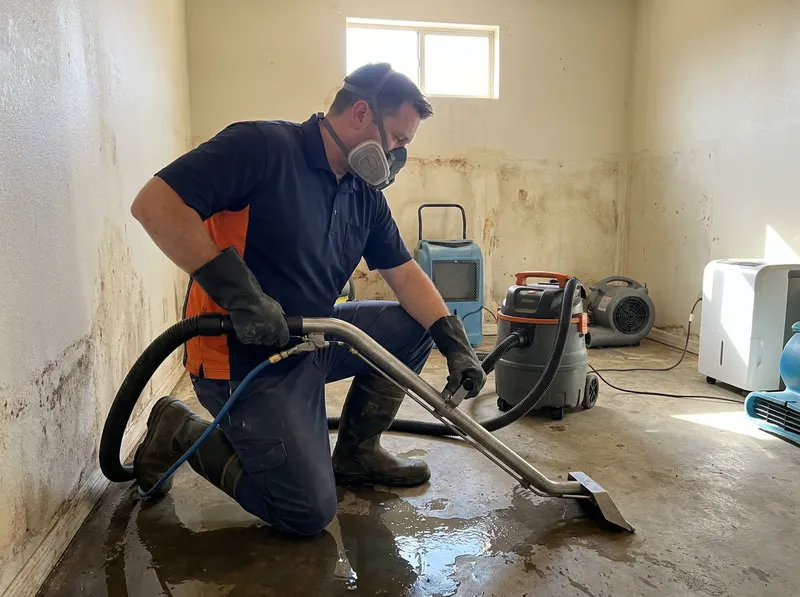
Removal and sanitizing after a sewage backup or flood water carrying outdoor contaminants. Category 3 water requires disposal of porous materials, carpet pad, lower drywall, and affected flooring, followed by antimicrobial treatment. Work is handled with containment barriers and negative air so contaminants do not spread to clean rooms, and the affected zone is treated with an EPA-registered antimicrobial before rebuild. This is the category that follows a sewer line backup or a monsoon flood pushing wash runoff into a garage.
Get a quote →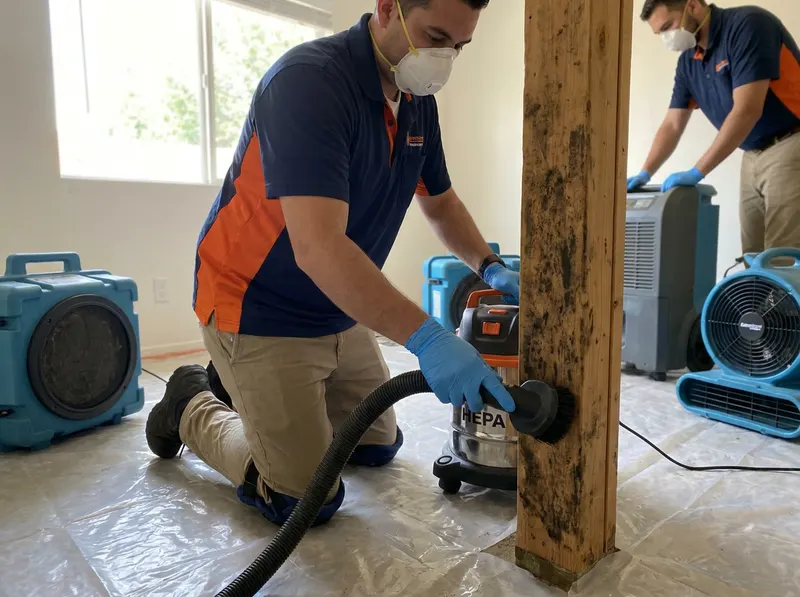
Containment, HEPA filtration, and removal of mold that follows an untreated water loss. Visible growth on drywall or a persistent musty smell signals moisture that sat past 48-72 hours, the window in which mold begins to colonize damp material. Work is scoped so a clearance check confirms the area is dry and clean before rebuild. Containment keeps spores from moving through the HVAC system to the rest of the house during removal.
Get a quote →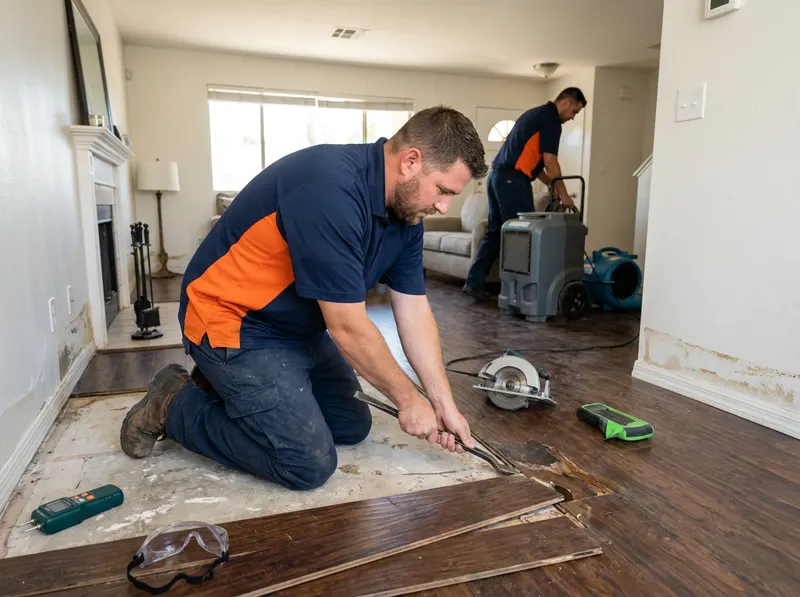
Drying or replacement of tile, laminate, hardwood, and the subfloor beneath it. Hardwood cups and laminate swells once water sits, so speed determines whether a floor is saved or replaced, hardwood reached within 24 hours can often be dried, laminate rarely survives. Concrete slabs common in Phoenix homes are moisture-mapped before new flooring goes down, because sealing new floor over a wet slab traps moisture and fails within months. Tile over a wet slab is lifted only where the mapping shows moisture, keeping demolition to what is actually needed.
Get a quote →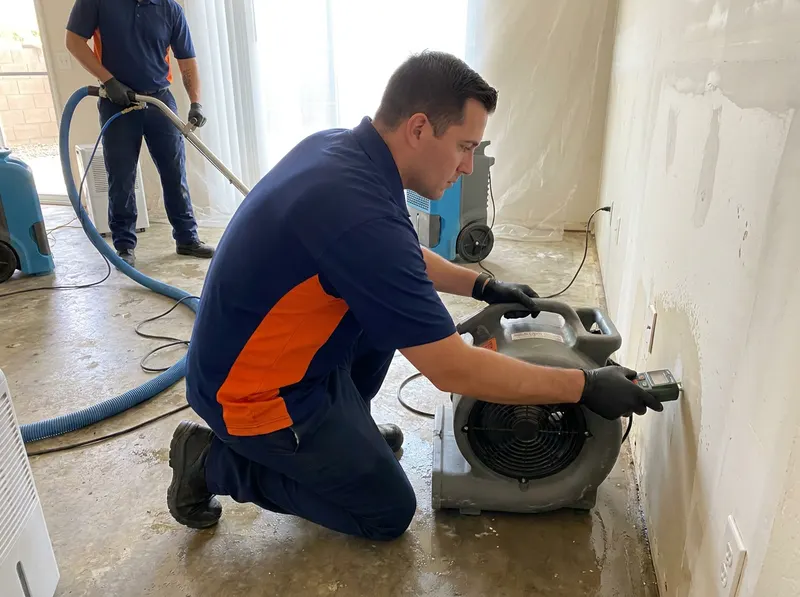
Cleanup after monsoon flash flooding, dust-storm-driven rain, and runoff from the desert washes that cut through Laveen and areas near the Rio Salado Habitat Restoration Area. Flood water from outside is treated as category 3 because it carries soil, road runoff, and debris, so extraction is followed by removal of porous materials and antimicrobial treatment rather than drying in place. Ground-level rooms, garages, and finished patios that take on outdoor water are extracted, dried, and rebuilt.
Get a quote →You get a firm, itemized quote for your water damage restoration before any work begins, no surprises, no pressure.
Careful prep, tidy work, and a full cleanup when we are done. We treat your home and belongings like our own.
The same trusted, background-checked team from the first call to the final check.
If you have standing water spreading right now, the first call is emergency extraction and mitigation, because every hour water sits it wicks higher up drywall and deeper into subfloor. If the water is already gone but the area feels damp or smells musty, choose structural drying with moisture mapping to prevent mold behind walls. If dark staining or spores are already visible, the job moves to mold remediation with containment, and the trade-off is a longer timeline and a required air-quality clearance versus simply drying an area that was caught early.
A clean-water leak from a supply line is category 1 and dries fastest; a dishwasher or washing-machine overflow is category 2 grey water; a sewage backup or monsoon flood carrying outdoor runoff is category 3 black water and requires disposal of porous materials like carpet pad and lower drywall rather than drying them in place. Water category also changes what can be saved: category 1 water lets hardwood, drywall, and insulation dry in place if reached within 24 hours, while category 3 water forces removal of anything porous it touched regardless of timing. The rule of thumb: catch it in the first 24-48 hours and drying alone usually restores it; wait past 72 hours and the scope typically widens to demolition and rebuild.
If the loss is a single bathroom or laundry room, expect a 3-day dry-out and no rebuild; if water crossed into two or more rooms and reached the subfloor, plan on drying plus a rebuild phase that can double the timeline.
Every project gets a firm, written price after a free on-site visit. Ranges below for orientation.
Phoenix loses water two ways that most of the country does not: monsoon microbursts from mid-June to late September dump an inch of rain in an hour onto flat roofs that were never built to shed it, and the same dry heat that cracks a slab foundation also hides slow supply-line leaks under it until the flooring lifts. Older homes in the Willo Historic District and Encanto-Palmcroft carry mid-century plumbing and plaster walls that hold moisture far longer than modern drywall, so a leak there dries slower and needs closer monitoring. Newer builds in Desert Ridge and Paradise Valley Village sit on post-tension slabs where a slab leak surfaces as a warm floor spot or a jump in the water bill before any water is visible, which is why moisture mapping matters more here than in a home with a raised foundation. Areas near the desert washes feeding the Rio Salado Habitat Restoration Area and the base of South Mountain Park take on outdoor runoff during flash flooding, which arrives as category 3 black water rather than a clean leak and forces removal of soaked carpet and lower drywall instead of drying them. Homes in Laveen and Maryvale sitting downhill from washes see the most storm-driven intrusion, while the older core near the Arizona State University Downtown Campus and Encanto-Palmcroft sees more supply-line and sewer-line failures tied to aging pipe. The evaporative pace of a Phoenix summer cuts both ways, low outdoor humidity helps a properly sealed dry-out run faster than the national average, but a slab or wall cavity that traps moisture stays wet long after the surface feels dry, which is why daily meter readings, not appearance, decide when drying is finished.
 Water Damage Restoration Phoenix