A burst pipe releases clean Category 1 water, but that classification changes fast. The IICRC S500 standard notes water untreated for 24 to 48 hours can degrade to Category 2, which is why extraction timing decides…
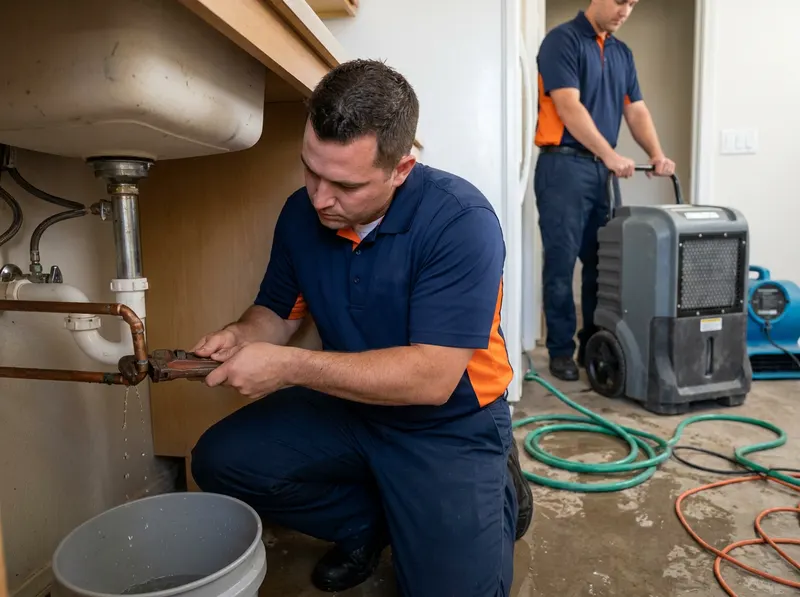
A burst pipe releases clean Category 1 water, but that classification changes fast. The IICRC S500 standard notes water untreated for 24 to 48 hours can degrade to Category 2, which is why extraction timing decides whether flooring is dried in place or removed. In Phoenix, the two most common failures are pinhole leaks in aging copper lines and split fittings after a rare hard freeze, which North Central Phoenix and higher-elevation pockets near Piestewa Peak see on the coldest January mornings when exposed hose bibs and uninsulated pipes drop below 32°F.
The first step is shutting off water at the home's main valve, usually near the front hose bib or in the garage. Step two is extraction of standing water with truck-mounted or portable units. Step three is a moisture map: pin and pinless meters measure how far water wicked up drywall and under baseboards, since water climbs vertically about 12 to 24 inches into gypsum board within hours. Step four is placement of air movers and commercial dehumidifiers, roughly one dehumidifier per 500 to 800 square feet. Step five is daily monitoring until wood framing returns to a moisture content near 12 to 15 percent.
The repair scope depends on the material the water touched. A burst line under a kitchen sink in an Arcadia ranch home may only require drying the cabinet base and a lower drywall section. A second-floor supply line that fails in a Desert Ridge or Paradise Valley Village two-story soaks the ceiling below, and saturated drywall ceilings sag and often need cutting out rather than drying. Homes in the Willo Historic District and Encanto-Palmcroft add plaster-and-lath walls and original hardwood, which dry slower and are documented separately so the claim reflects the older building materials. Tile over concrete slab in Maryvale, Laveen, and Ahwatukee Foothills often dries in place, but water trapped under the slab's vapor barrier or beneath vinyl plank requires lifting a few planks to vent the subfloor.
Drying a burst-pipe loss usually runs 3 to 5 days for a single room and 5 to 7 days when multiple rooms or a ceiling assembly are involved. That timeline is set by moisture readings, not a fixed schedule, and equipment stays until the numbers hit target. A pipe repair itself is a separate plumbing trade; restoration covers the water damage, the drying, and the rebuild of drywall, paint, and flooring after the leak is fixed. Every reading and photo is compiled into a scope a Maricopa County homeowner can hand directly to their insurance adjuster, and the process is walked through with the property owner before work begins.
Every job gets a firm, written price after a free on-site visit.
Tell us about your burst & frozen pipe water damage job in Phoenix and we'll send a clear, written quote, usually the same day.
 Water Damage Restoration Phoenix