Category 3 water is defined by the IICRC S500 standard as containing pathogenic, toxigenic, or other harmful agents, this covers sewage from a backed-up main, water rising from ground-level flooding, and any Category 1…
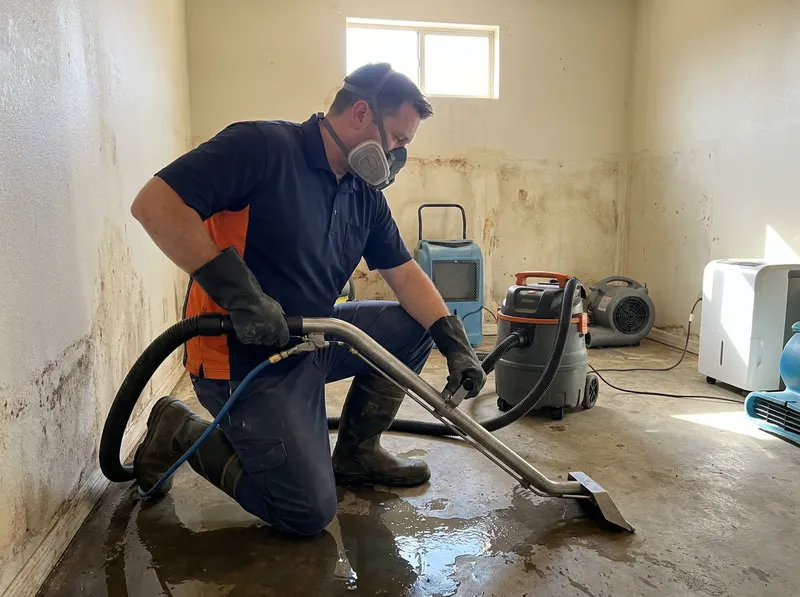
Category 3 water is defined by the IICRC S500 standard as containing pathogenic, toxigenic, or other harmful agents, this covers sewage from a backed-up main, water rising from ground-level flooding, and any Category 1 or 2 water left standing long enough to grow bacteria (typically past 48, 72 hours). Because it is a biohazard, the response differs from clean-water restoration: technicians set containment barriers, wear PPE, and treat every porous surface the water touched as non-salvageable rather than trying to dry it in place.
The sequence runs in a fixed order. First, the source is stopped or isolated, a failed sewer line, a cracked cast-iron drain common in Willo Historic District and Encanto-Palmcroft homes built before 1950, or a mainline blockage. Second, solids and standing water are extracted with truck-mounted or portable units. Third, contaminated carpet, pad, and drywall (usually cut 12, 24 inches above the water line) are removed and bagged for disposal. Fourth, all exposed framing and subfloor are cleaned and treated with an EPA-registered antimicrobial. Fifth, air movers and dehumidifiers run for roughly 3, 5 days until moisture-meter readings return to the material's dry standard.
Category 3 cleanup applies when the water is visibly or chemically contaminated. A clean supply-line leak that is caught early is a Category 1 job and often dries in place. A dishwasher or washing-machine overflow is Category 2. Once sewage, a toilet overflow past the trap, or ground flood water is involved, it is Category 3 regardless of how clean it looks, the contamination is biological, not visual. The trade-off is straightforward: Category 3 costs more and removes more material because containing pathogens is the priority, not preserving flooring. Attempting to dry contaminated materials in place instead of removing them is the most common cause of mold and lingering odor.
Phoenix conditions shape the work. Slab-on-grade construction across Desert Ridge, Laveen, and Paradise Valley Village means sewage often spreads under baseboards and into wall cavities rather than draining away. Summer heat above 100°F accelerates bacterial growth in standing water, which is why extraction speed matters more here than in milder climates. In older Sunnyslope and Maryvale homes, aging clay and cast-iron sewer laterals raise the odds of a mainline backup that pushes Category 3 water up through the lowest drain. Documentation for a Maricopa County insurance claim, photos, moisture logs, and a scope of removed materials, is recorded from the first visit so the claim reflects the biohazard classification.
Every job gets a firm, written price after a free on-site visit.
Tell us about your category 3 sewage & black water cleanup job in Phoenix and we'll send a clear, written quote, usually the same day.
 Water Damage Restoration Phoenix